HOW TO CONNECT AND SECURE
TRAILER SAFETY CHAINS
This blog explains why safety chains are important when hauling, how to connect safety chains, how to check to ensure connection, common mistakes and when to contact a professional.
SAFETY CHAINS 101:
When it comes to towing safely, most people focus on the hitch, coupler, and load. While those components are critical, there’s one simple step that often gets overlooked: properly hooking up your trailer safety chains.
Why is this Important?
Safety chains serve as a backup connection between your truck and trailer. If the unexpected happens and your coupler comes unhooked from the hitch ball, the safety chain helps keep your trailer attached, maintain control and keeps everyone safe. Think of your trailer’s safety chains as your last line of defense.
What to inspect before connecting chains.
Before hooking up your trailer to your tow vehicle, inspect the following:
- Chain Condition
- Hitch Size
- Hooks and Latches
- Attachment Points
- Chain Rating
- Proper Length
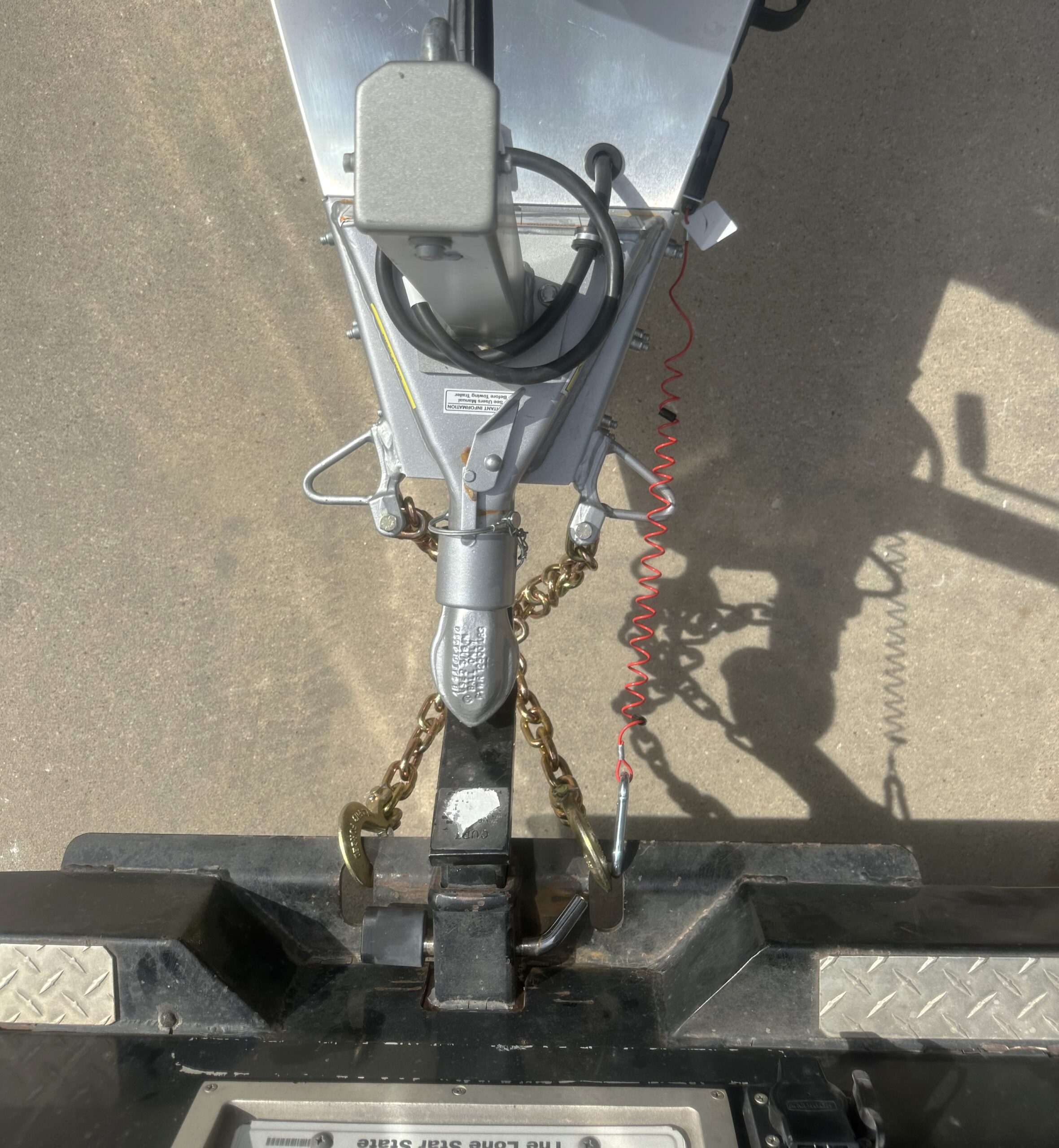
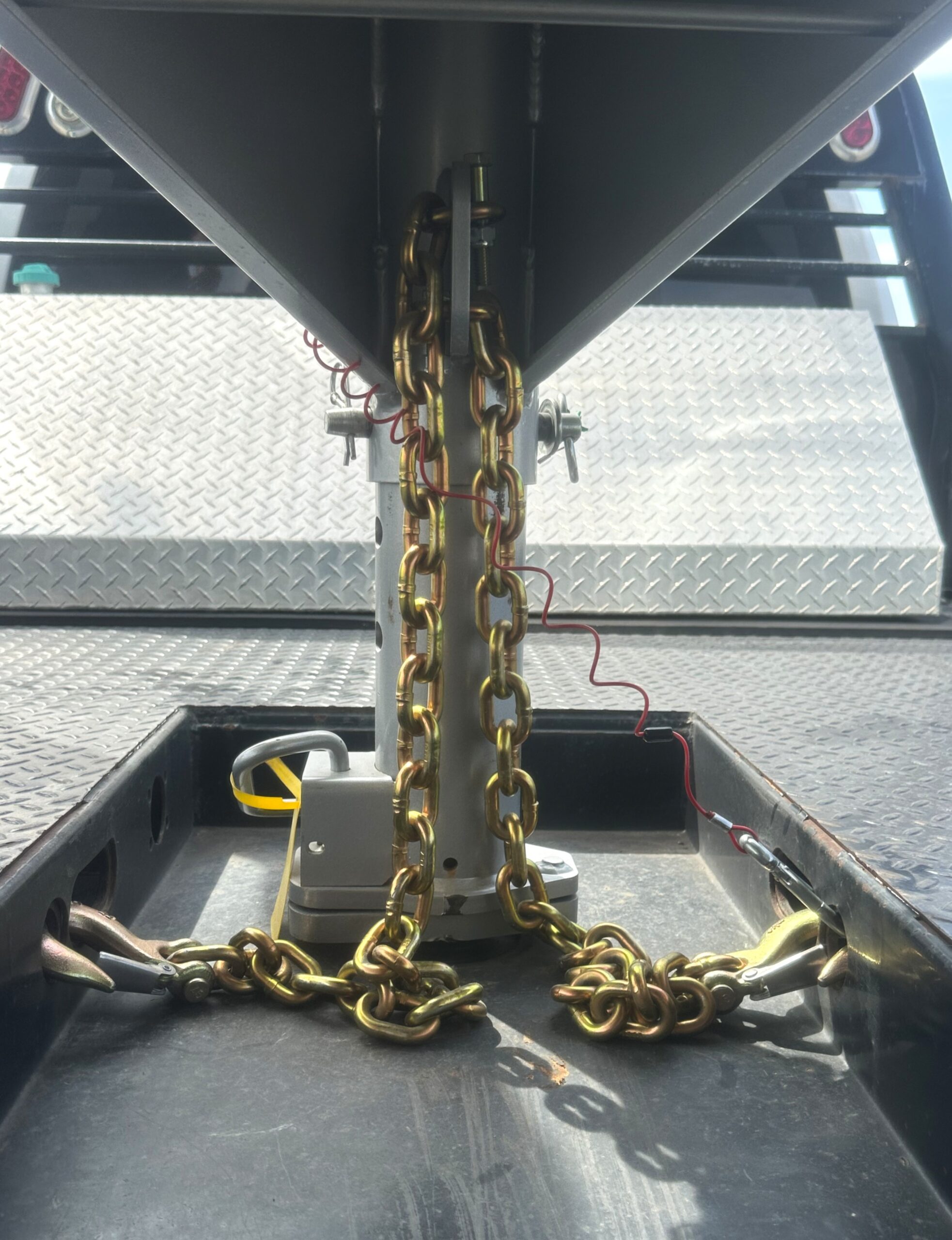
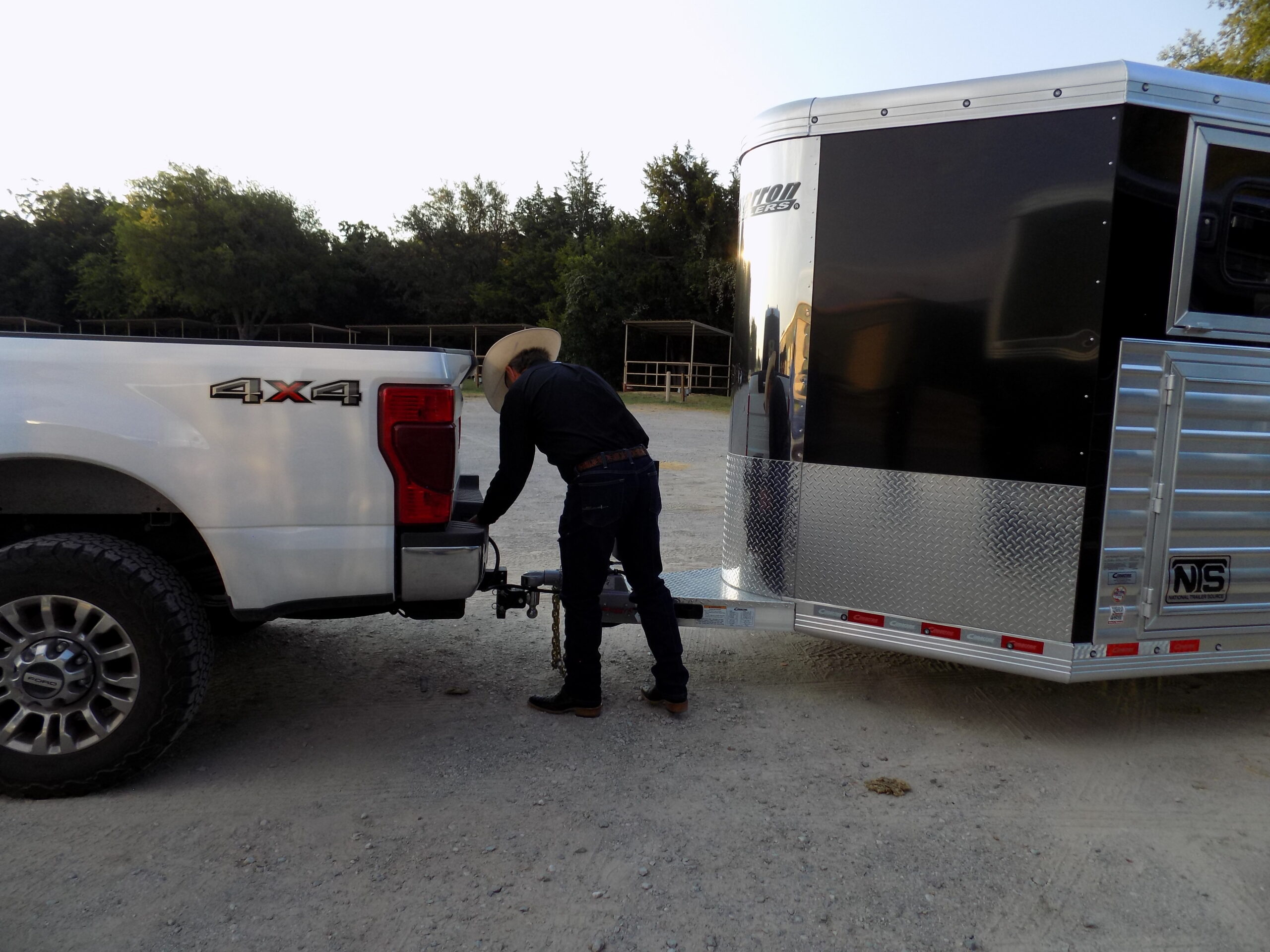
Step-By-Step Connection Instructions
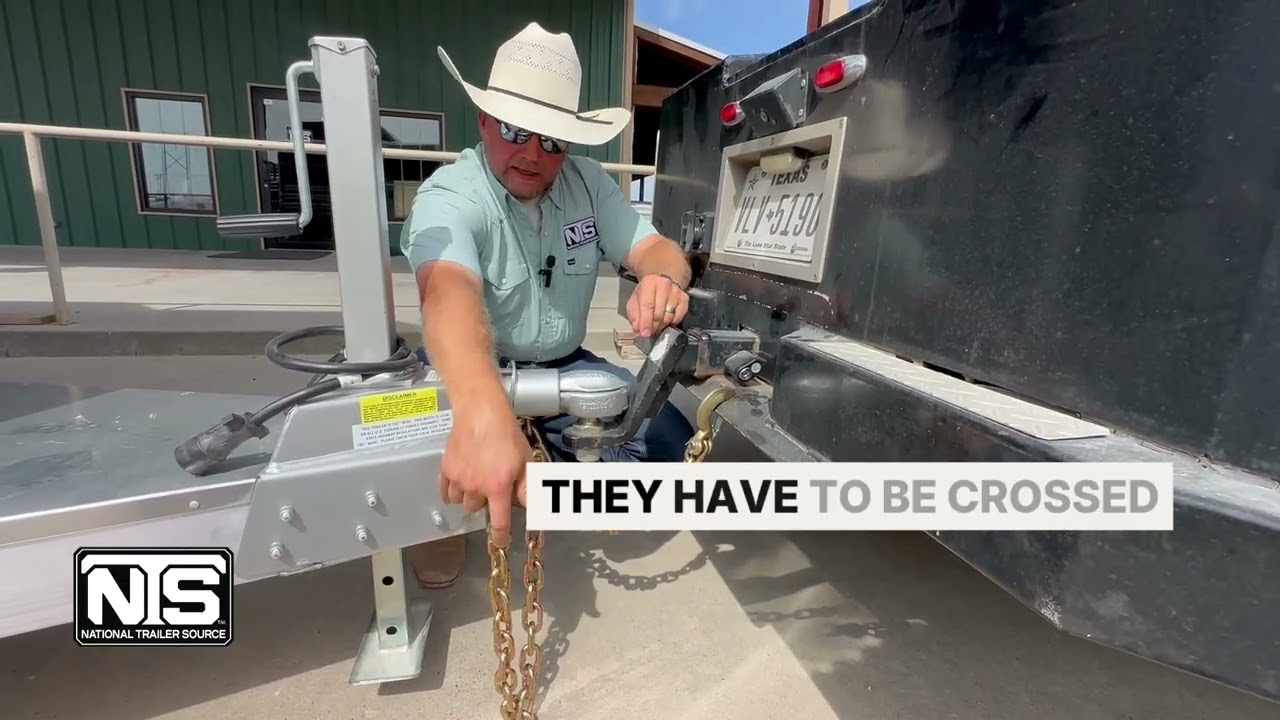
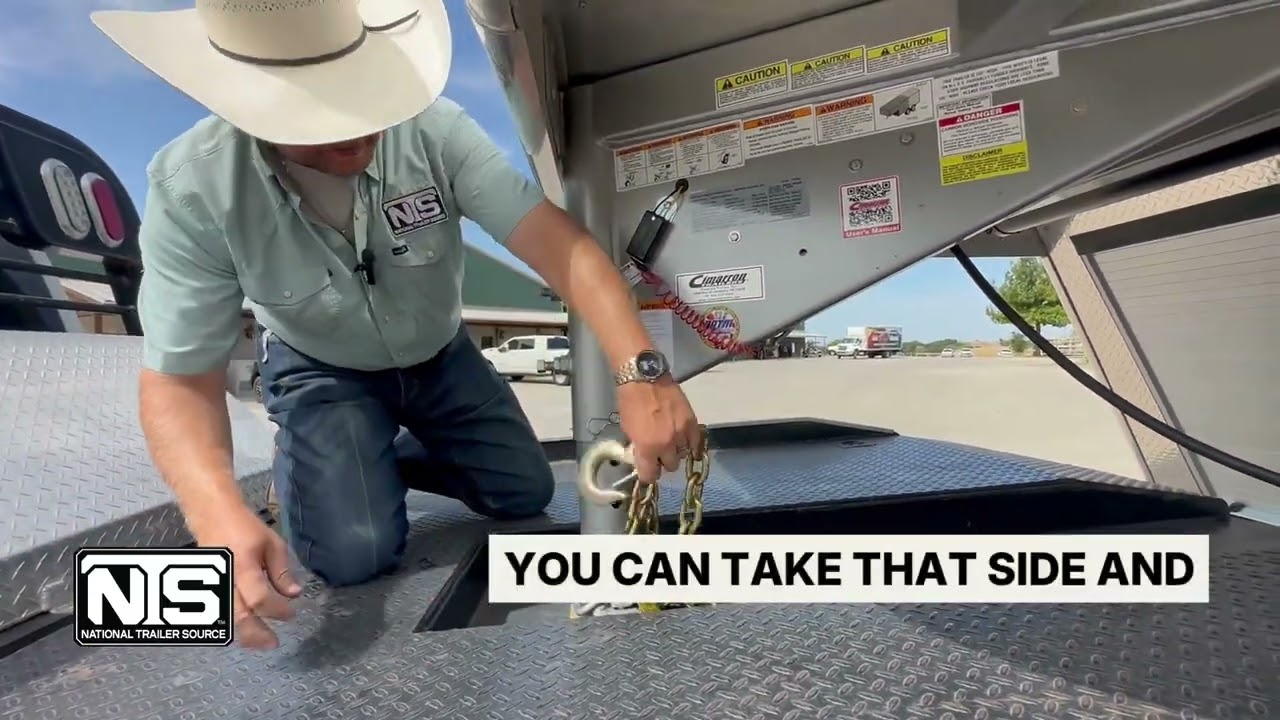
Crossing your Chains
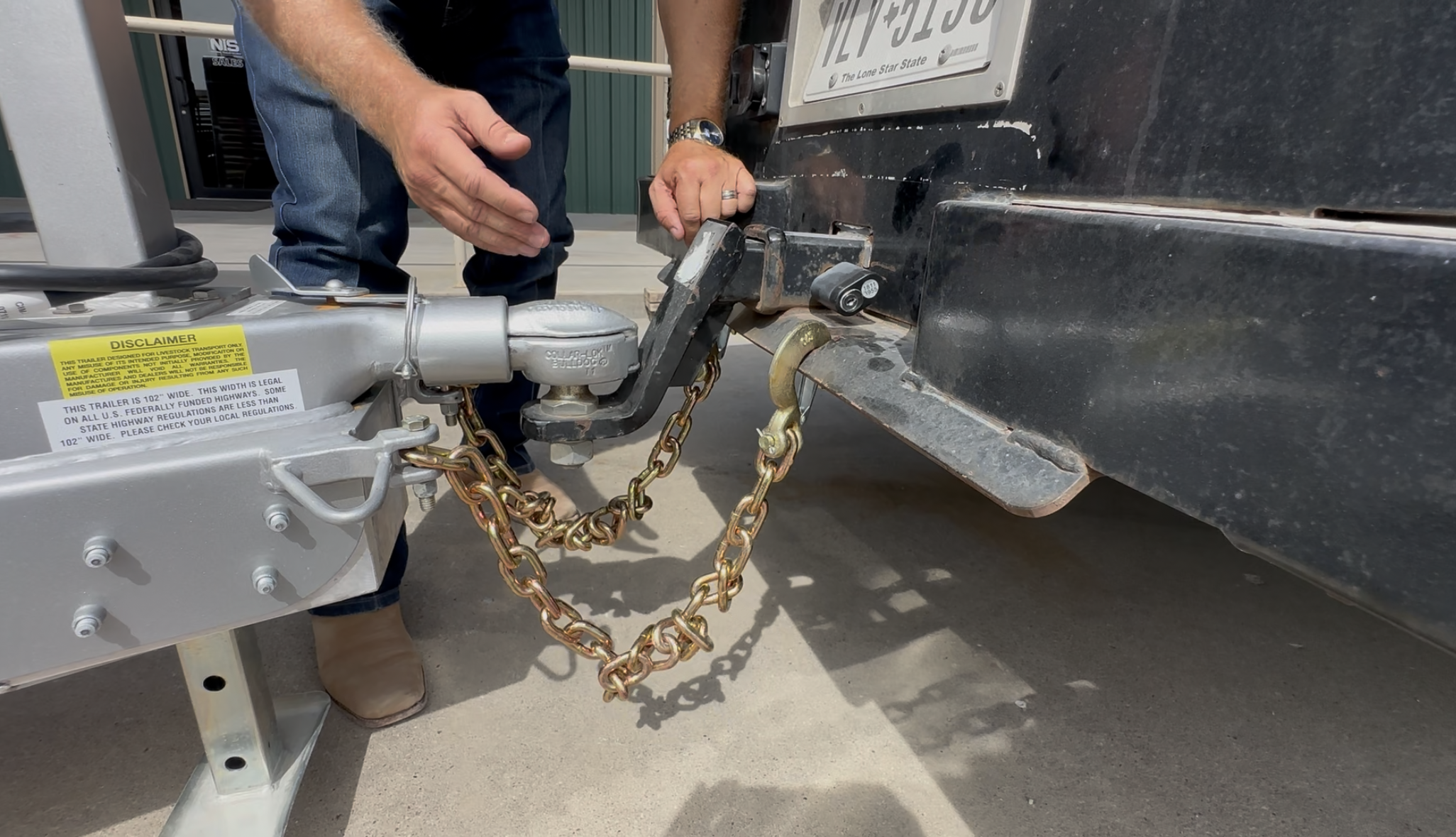
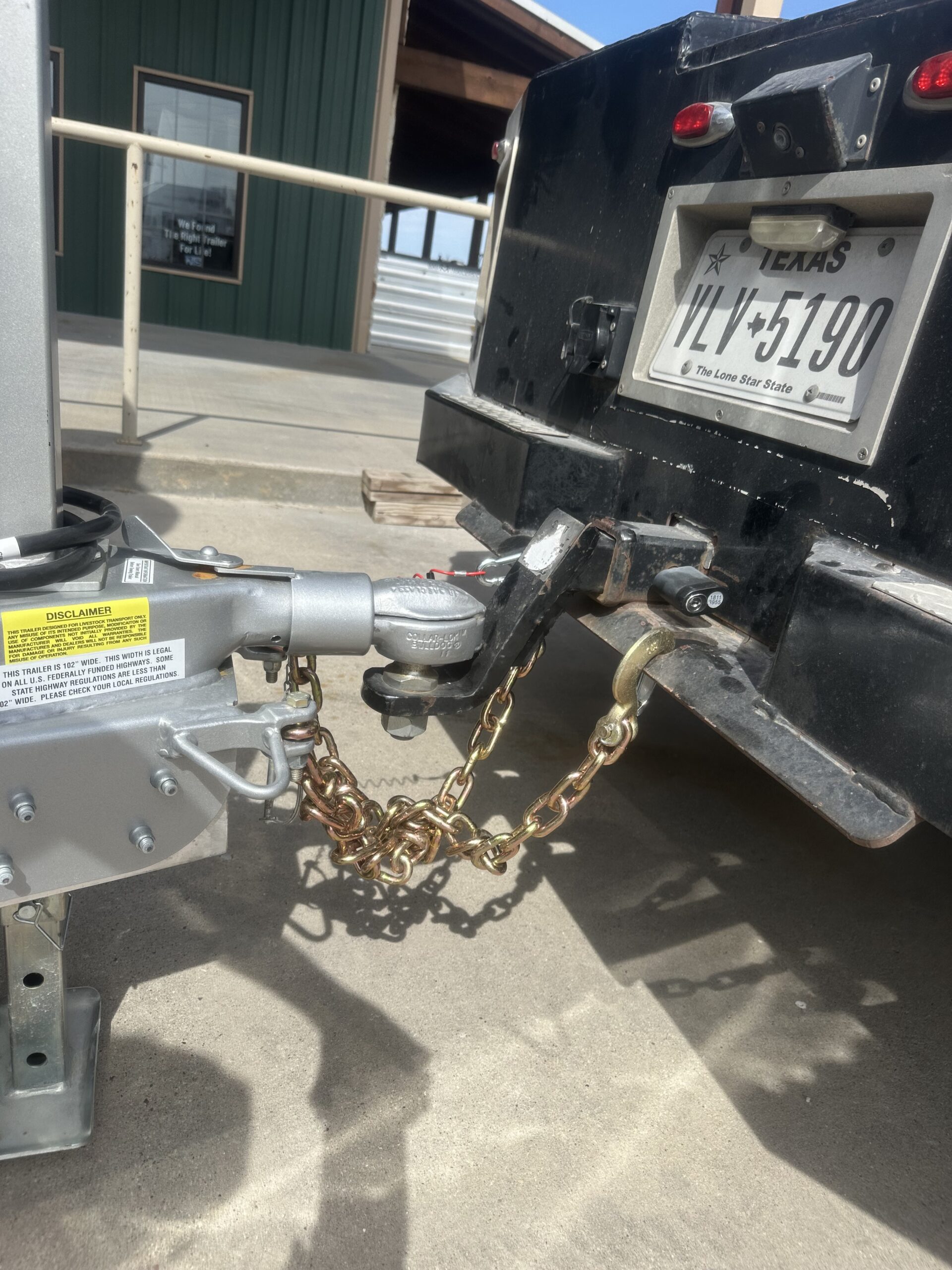
Crossing the chains on a bumper pull trailer creates a cradle beneath the coupler. If the trailer becomes disconnected, the crossed chains can help support the tongue and prevent it from digging into the pavement. This helps maintain control and reduces the risk of severe damage.
Checking Chain Length
The following are important factors to consider about your safety chain length.
- Your safety chain is long enough to make full turns.
- Your safety chain is short enough it does not drag.
If your safety chains are too short, they can bind in sharp turns. If they are too long they can drag and wear your chains.
Breakaway Cable
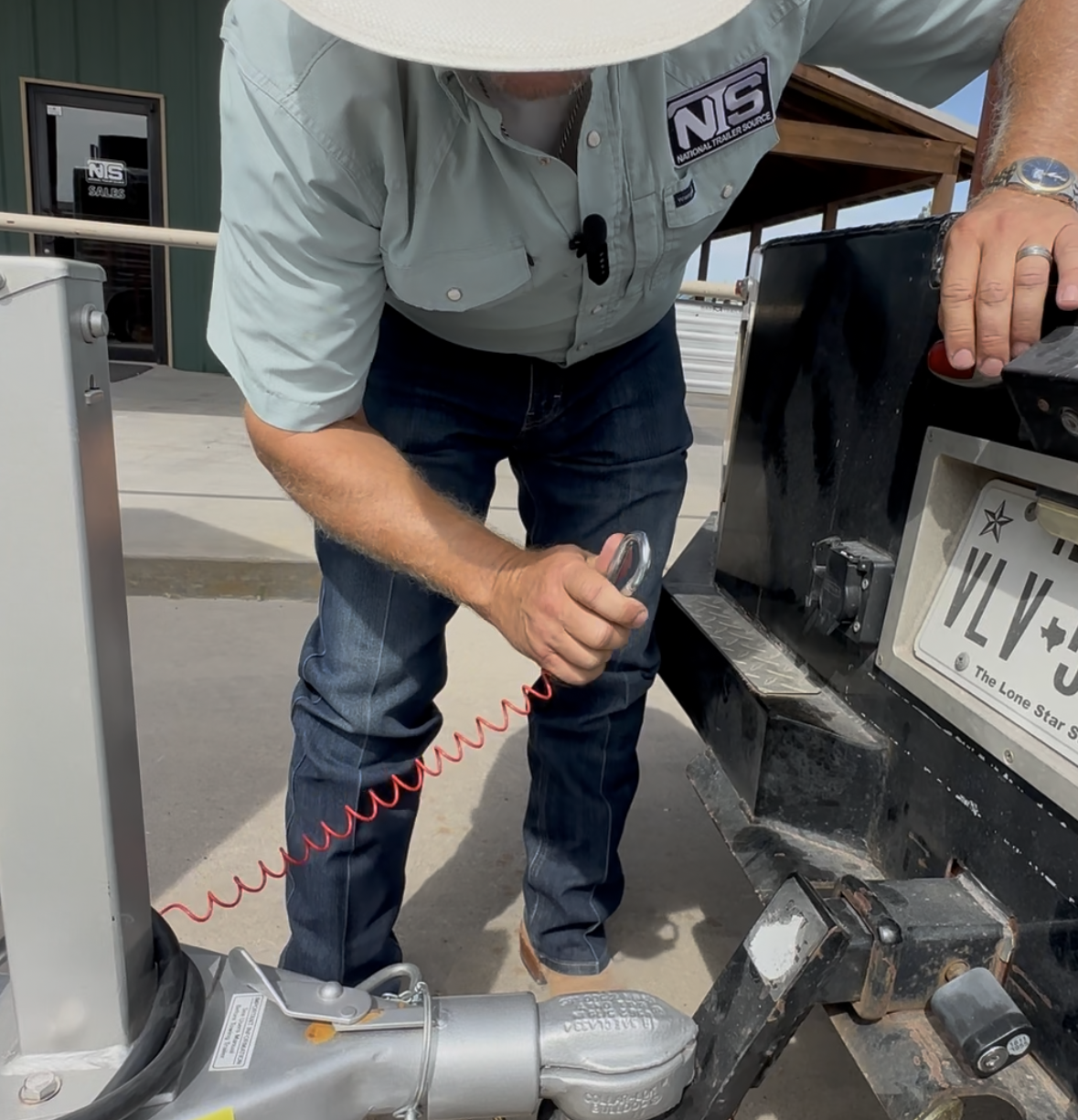
The breakaway cable is one of the most important safety features on your trailer. If the trailer becomes disconnected from the tow vehicle, the cable pulls a pin that automatically activates the trailer’s electric brakes, helping bring the trailer to a stop instead of allowing it to continue uncontrolled down the road. Always connect the breakaway cable directly to the tow vehicle, separate from the safety chains, and check that it moves freely before every trip.
The Final Inspection
Inspect before hitting the road:
- Check that attachment points are secured.
- Make sure your chains are not damaged.
- Check that your chains are the proper slack and crossed correctly (if needed).
Common Mistakes
- Leaving too much slack.
- Over-twisting chains and making them too short.
- Hooking safety chains to the ball mount instead of the designated attachment points.
- Using underrated chains.
- Make sure your chains are suited to the trailer’s gross weight.
- Using chains that are damaged or worn down, preventing safety chains from doing their job.
- Failing to inspect before hitting the road.
When to Contact NTS or Qualified Professional
- Chains show any signs of dragging on the ground or look damaged in any way.
- If the trailer has ever come loose and the chains were stressed.
- Chains are rusty.
- Have chains inspected annually along with other maintenance to ensure strength and safety.

HOOKING UP YOUR TRAILER CHECKLIST
Verify chains are in good shape with no signs of wear or damage.
Connect chains to proper chain hooks or brackets depending on your hitch type.
Ensure chains do not interfere with rotation of the hitch on a turn.
Make sure the chains are not too long or too short.
Inspect the chains each time you connect the trailer.
Call NTS if you have any problems.