How to Choose the Right Utility Trailer: The Complete Buyer’s Guide
Buying a utility trailer seems straightforward until you start comparing trailer sizes, axle configurations, weight capacities, loading options, and trailer styles. With so many choices available, it’s easy to purchase a trailer that doesn’t fully meet your needs.
Whether you’re a homeowner tackling weekend projects, a landscaper transporting equipment, a contractor hauling materials, or a farmer maintaining acreage, the right utility trailer can save time, improve efficiency, and make every hauling job easier.
At National Trailer Source, we help customers find the right trailer every day. One of the most common mistakes we see is buyers choosing a trailer based solely on price instead of considering how they’ll use it over the next several years.
This guide breaks down everything you need to know before purchasing a utility trailer so you can make the right investment the first time.
What Is a Utility Trailer?
A utility trailer is one of the most versatile trailer types available. Designed to transport equipment, tools, materials, vehicles, and supplies, utility trailers are used by homeowners and professionals across countless industries.
Common uses include:
- Transporting lawn equipment
- Moving furniture and appliances
- Hauling construction materials
- Carrying ATVs and UTVs
- Farm and ranch work
- Landscaping projects
- Equipment transportation
- Small business operations
Because they are available in a variety of sizes and configurations, utility trailers can be customized to fit almost any hauling need.
Why Choosing the Right Utility Trailer Matters
A utility trailer is more than just a way to move cargo. The trailer you choose affects loading efficiency, towing safety, maintenance requirements, and overall productivity.
Many first-time buyers focus only on purchase price. While budget is important, selecting a trailer that’s too small or lacks the features you need can create frustration and additional costs later.
A trailer with insufficient capacity may require multiple trips. A trailer that’s too small for future projects may need to be upgraded sooner than expected. On the other hand, a properly sized trailer can provide years of reliable service while helping you complete jobs more efficiently.
Whether you’re hauling equipment every day or only using your trailer a few times each month, selecting the right model is an investment in convenience and long-term value.
What We See Most Often at National Trailer Source
After helping thousands of customers shop for trailers, we’ve noticed a few common trends.
Many first-time buyers assume they only need enough trailer for their current project. However, once they own a trailer, they often discover countless additional uses for it. A homeowner who purchases a trailer for a landscaping project may later use it for hauling furniture, transporting ATVs, moving equipment, or helping friends and family with projects.
Because of this, one of the most common recommendations our team makes is to buy slightly more trailer than you think you’ll need. The difference in cost between trailer sizes is often much smaller than the cost and hassle of upgrading later.
We’ve also found that buyers frequently underestimate cargo weight. Equipment, attachments, fuel, tools, and materials add up quickly. Understanding your actual hauling requirements before purchasing a trailer can help avoid safety issues and save money over the long run.
The Most Important Features to Consider Before Buying a Utility Trailer
Before choosing a trailer, it’s important to evaluate your hauling needs carefully.
Trailer Size
One of the most important decisions is selecting the correct deck size.
While a compact trailer may appear sufficient today, many buyers discover they need additional space as projects grow.
Common utility trailer sizes include:
- 5′ x 8′ for light-duty hauling
- 6′ x 12′ for homeowners and general-purpose use
- 7′ x 14′ for landscaping and equipment hauling
- 7′ x 16′ and larger for commercial applications
If you’re unsure between two trailer sizes, choosing the larger option often provides greater flexibility for future projects.
Weight Capacity
Understanding weight capacity is critical.
Every trailer has a Gross Vehicle Weight Rating (GVWR), which represents the maximum loaded weight the trailer can safely handle.
When calculating weight requirements, consider:
- Trailer weight
- Equipment weight
- Cargo weight
- Fuel and accessories
- Tools and attachments
Choosing the correct capacity improves safety and helps prevent unnecessary wear on your trailer and towing vehicle.
Construction Quality
Not all trailers are built alike.
A quality utility trailer should include:
- Durable steel construction
- Quality welds
- Reinforced flooring
- Reliable axles and suspension
- LED lighting systems
- Corrosion-resistant finishes
Investing in quality construction can significantly increase trailer lifespan while reducing maintenance expenses.
What Trailer Buyers Ask Us Most
Whether you’re purchasing your first trailer or replacing an existing one, these are some of the questions we hear most often.
Should I Buy a Single Axle or Tandem Axle Trailer?
The answer usually comes down to how often you haul and how much weight you’re carrying.
If you’re mainly handling weekend projects, lawn equipment, and occasional hauling, a single axle trailer may be all you need.
However, customers hauling skid steers, tractors, construction materials, or multiple commercial mowers typically benefit from the added stability and payload capacity of a tandem axle trailer.
When customers are deciding between the two, our team often recommends considering what they’ll need three years from now rather than what they need today.
What Is the Most Popular Utility Trailer Size?
The most popular utility trailer sizes we sell are:
- 6×12 Utility Trailers
- 7×14 Utility Trailers
- 7×16 Utility Trailers
These sizes offer an excellent balance between towing convenience and hauling capacity.
Should I Buy New or Used?
A quality pre-owned trailer can provide outstanding value.
However, many buyers prefer new trailers because they offer:
- Warranty coverage
- New components
- Longer service life
- More customization options
The best choice depends on your budget, workload, and long-term plans.
Open Utility Trailer vs. Enclosed Utility Trailer
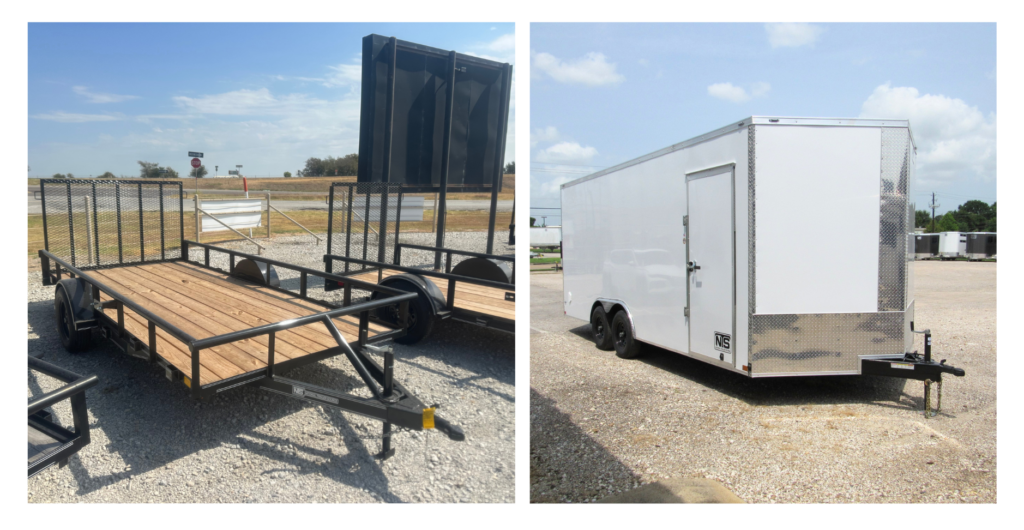
One of the most common decisions buyers face is choosing between an open trailer and an enclosed trailer.
Open Utility Trailers
Open trailers are popular because they are affordable, lightweight, and versatile.
Benefits include:
- Lower purchase price
- Easier loading and unloading
- Lighter towing weight
- Greater flexibility for oversized cargo
Open trailers are often ideal for landscaping equipment, building materials, machinery, and general hauling.
Enclosed Utility Trailers
Enclosed trailers provide additional protection and security.
Benefits include:
- Weather protection
- Theft protection
- Lockable storage
- Professional appearance
They are commonly chosen by contractors, service companies, and anyone transporting valuable equipment.
The 5 Best Utility Trailer Types
1. Single Axle Utility Trailers
Single axle utility trailers are compact, affordable, and easy to maneuver.
They’re ideal for:
- Homeowners
- Small property maintenance
- Lawn equipment
- Home improvement projects
- Light-duty hauling
Advantages
- Lower cost
- Easier towing
- Better fuel efficiency
- Simpler maintenance
For occasional hauling and smaller loads, a single axle trailer is often the most economical choice.
2. Tandem Axle Utility Trailers
For heavier loads and demanding applications, tandem axle trailers offer additional strength and stability.
They’re commonly used for:
- Construction equipment
- Commercial landscaping
- Farm and ranch work
- Heavy materials
- Frequent hauling
Advantages
- Higher payload capacity
- Improved towing stability
- Better weight distribution
- Smoother ride quality
What Our Team Recommends
If you’re regularly hauling equipment weighing more than 3,000 to 4,000 pounds, we typically recommend looking at tandem axle trailers first.
The difference in towing stability can be noticeable, especially during longer trips and highway travel. While they cost more upfront, many commercial customers find they’re worth the investment.
3. Enclosed Utility Trailers
Enclosed trailers offer the ultimate combination of protection and versatility.
Ideal applications include:
- Tool transportation
- Contractor equipment
- Mobile businesses
- Recreational equipment
- Event support
Advantages
- Security
- Weather protection
- Mobile storage
- Professional appearance
Why Contractors Frequently Choose Enclosed Trailers
Many contractors initially shop for open utility trailers because they’re less expensive.
However, after calculating the value of the tools and equipment they’ll be transporting, they often decide that an enclosed trailer is the smarter long-term solution.
For many businesses, an enclosed trailer becomes a mobile workshop, storage unit, and transportation solution all in one.
4. Tilt Utility Trailers
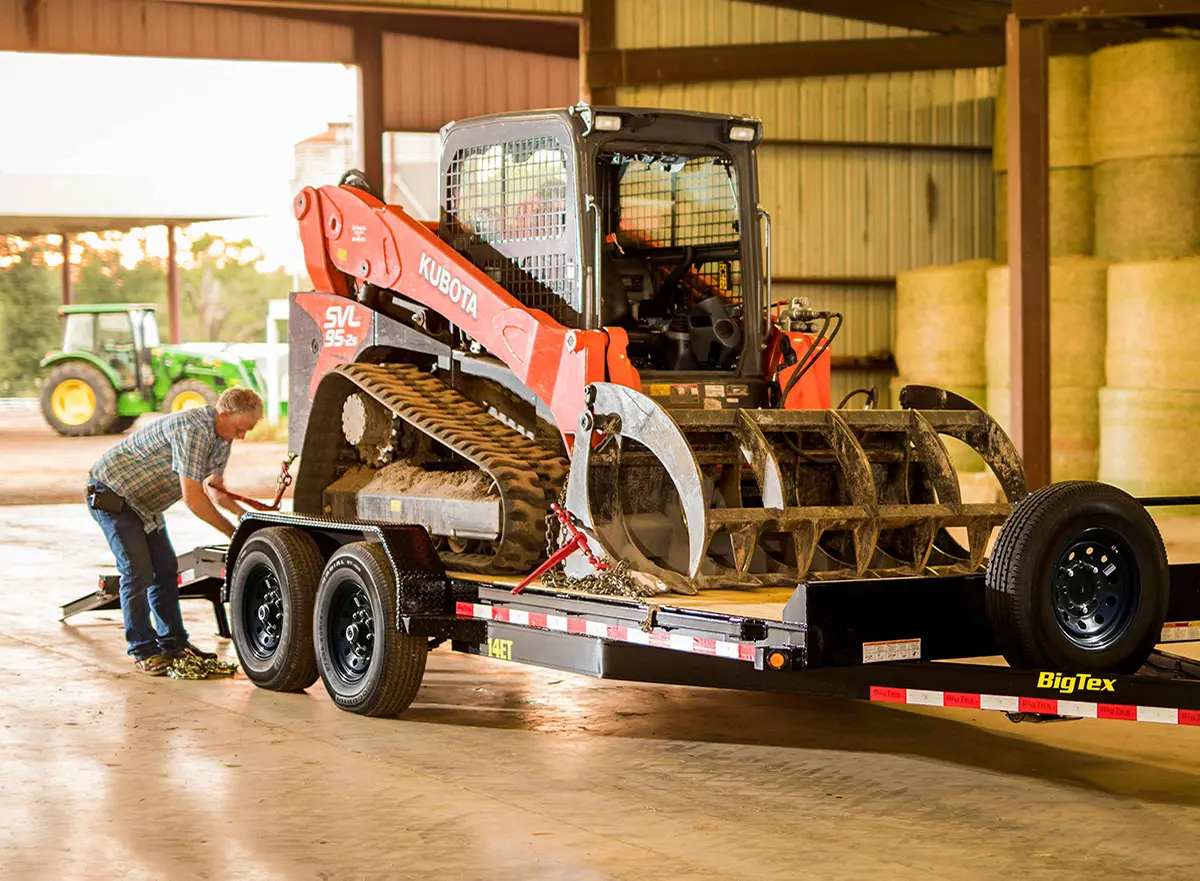
Tilt trailers are designed to simplify loading and unloading equipment.
Instead of relying on separate loading ramps, the trailer bed tilts, allowing equipment to be driven directly onto the deck.
Perfect for:
- Skid steers
- Compact tractors
- Zero-turn mowers
- UTVs
- Construction equipment
Advantages
- Faster loading
- Increased efficiency
- Reduced physical effort
- Improved convenience
For equipment operators, tilt trailers can significantly reduce loading time.
5. Pre-Owned Utility Trailers
Used utility trailers offer excellent value for buyers looking to maximize their budget.
A well-maintained pre-owned trailer can provide years of dependable service at a lower upfront cost.
Advantages
- Lower purchase price
- More trailer for your budget
- Proven durability
- Wide selection of options
At National Trailer Source, our pre-owned inventory is carefully inspected to help ensure quality and reliability.
Shop Pre-Owned Utility Trailers
Which Utility Trailer Is Right for You?
If you’re still deciding, here’s a quick guide.
Best for Homeowners
A single axle utility trailer is typically ideal for yard work, moving furniture, and occasional hauling.
Best for Landscapers
Tandem axle trailers provide the capacity needed for mowers, landscaping materials, and daily commercial use.
Best for Contractors
Enclosed trailers help protect valuable tools and equipment while providing additional storage.
Best for Equipment Hauling
Tilt trailers simplify loading and unloading machinery.
Best for Budget-Conscious Buyers
A quality pre-owned trailer can provide exceptional value without sacrificing reliability.
Utility Trailer Comparison Chart
| Trailer Type | Best For | Investment Level | Load Capacity |
| Single Axle | Homeowners & Light Duty Use | $ | Light to Medium |
| Tandem Axle | Contractors & Heavy Hauling | $ | Medium to Heavy |
| Enclosed | Tool & Equipment Protection | $$ | Medium to Heavy |
| Tilt | Equipment Hauling | $$ | Medium to Heavy |
| Pre-Owned | Budget-Conscious Buyers | $ to $ | Varies |
Common Utility Trailer Buying Mistakes
Avoid these common mistakes when shopping for a trailer.
Buying Too Small
One of the most common regrets trailer owners have is not purchasing enough deck space.
Planning for future projects can help prevent upgrading sooner than expected.
Ignoring Weight Requirements
Always verify the weight of your equipment and materials before selecting a trailer.
Choosing an undersized trailer can create safety concerns and limit productivity.
Focusing Only on Price
The cheapest trailer isn’t always the best value.
Construction quality, reliability, and durability play a significant role in long-term ownership costs.
Overlooking Storage and Security
If you’re routinely transporting expensive equipment, an enclosed trailer may provide significant long-term value.
How Utility Trailer Needs Change Over Time
One thing we’ve learned from helping trailer buyers over the years is that their hauling needs rarely stay the same.
A homeowner may eventually purchase a tractor. A landscaper may add another crew. A contractor may need to transport additional equipment. A property owner may take on larger projects.
That’s why we encourage customers to think beyond today’s needs and focus on what they’ll likely be hauling over the next several years.
The right trailer should solve current challenges while providing flexibility for future growth.
Customers who take this long-term approach are often far more satisfied with their purchase and avoid upgrading sooner than expected.
How to Maintain Your Utility Trailer
Proper maintenance helps maximize trailer life and keeps your equipment operating safely.
To keep your trailer in top condition:
- Check tire pressure regularly
- Inspect lights before every trip
- Grease wheel bearings as recommended
- Examine safety chains and tie-down points
- Inspect trailer brakes if equipped
- Keep the trailer clean
- Address rust or corrosion quickly
Routine maintenance can help prevent costly repairs and extend the life of your trailer.
Why Buy From National Trailer Source?
National Trailer Source is committed to helping customers find the right trailer for work, recreation, agriculture, and commercial applications.
When you shop with National Trailer Source, you’ll find:
- New and pre-owned inventory
- Utility trailers
- Enclosed trailers
- Flatbed trailers
- Equipment trailers
- Tilt trailers
- Financing options
- Expert trailer guidance
Experience That Goes Beyond the Sale
At National Trailer Source, we don’t just sell trailers. Our team works with homeowners, contractors, landscapers, ranchers, farmers, and business owners every day to help match equipment with real-world hauling needs.
We understand the practical challenges trailer owners face because we have these conversations daily.
Whether you’re comparing trailer sizes, determining the right GVWR, choosing between axle configurations, or evaluating new versus used inventory, our goal is to help you make an informed decision rather than simply make a sale.
That’s why customers continue to rely on National Trailer Source for trailer expertise, inventory selection, and long-term support.
Frequently Asked Questions
What size utility trailer should I buy?
For many homeowners and small businesses, a 6×12 or 7×14 utility trailer offers an excellent balance of cargo space, towing convenience, and versatility.
Is a tandem axle trailer worth it?
Yes. If you regularly haul heavy equipment, construction materials, vehicles, or commercial landscaping equipment, tandem axles provide improved stability and higher payload capacity.
What’s better: an open trailer or an enclosed trailer?
Open trailers are typically more affordable and easier to load, while enclosed trailers provide additional security and weather protection.
Can I finance a utility trailer?
Many new and pre-owned utility trailers qualify for financing, allowing buyers to get the trailer they need while managing cash flow.
How long do utility trailers last?
A quality utility trailer can last for many years when properly maintained, stored, and serviced.
Find the Right Utility Trailer Today
Whether you’re a homeowner managing weekend projects, a contractor hauling equipment, a landscaper serving clients, or a farmer maintaining property, National Trailer Source has a utility trailer designed to meet your needs.
Browse our inventory to compare sizes, styles, and features, and let our team help you find the perfect trailer for your next project.